The Polish Parliament established the year 2026 Sergius Piasecki. This is an expression of appreciation for the writer, soldier of the Home Army and intelligence agent, known for his works specified as "The large Bear's Lover" or "The Red Army Officer's Record". This year is so especially intended to remind us of his steadfast attitude and literary achievements. Piasecki is simply a figure with specified rich résumés and accomplishments that he grew into legend. His work gained quite a few readers and became the focus of the researchers.
A Confused Life Story
He was born in 1899 in Lachovich close Baranovich. He was the boy of the Russianized Polish nobleman and Belarusian woman. The home was not spoken in Polish, and he was educated in Russian advanced schools. erstwhile the Bolshevik revolution broke out, he was in Moscow, where he could observe the panic that was set on fire. From that time until the end of his life, he became a bitter anti-communist. No wonder he participated in the defence of Warsaw in 1921. After demobilization, he couldn't find a place for himself. Among another things, he was active in smuggling and counterfeiting. He lived around criminals and people from the underworld. Due to good cognition of Russian and Belarusian Piasecki shortly became valuable to Polish intelligence. He worked for him under the pseudonym “White” and was engaged in providing funds to Polish agents located on the russian side. That's how he became a professional smuggler. erstwhile he fell into the hands of the Russians, but he made a bravado escape, and by the way he saved his colleague. For this feat he received the rank of lieutenant. However, his intelligence activity caused him to become addicted to drugs and was shortly released from his service. For deficiency of another options, he was active in armed robberies. 1 of them – on Lida-Grodno's passengers – ended up being sentenced to death for him. However, due to the boastful past of the defendant, the conviction was changed to 15 years of imprisonment in the dense Prison on the Holy Cross – the most restrictive penal institution of the Second Poland. However, Piasecki did not give in to the restrictions there, so he spent 2 years in solitary confinement. That is where he began to read books, especially the Bible, and experienced a spiritual awakening. Behind bars he learned Polish and then decided to write. He took advantage of his lush and insubordinate life. In 1934, even as a prisoner, he took part in a literary competition written by the “Illustrated regular Courier” appearing in Vilnius. During the month, he wrote his first fresh "The 5th Stage", which, however, was stopped by censorship and appeared only after his release from prison. A real literary debut was a fresh “Big Bear Lover” (most popular fresh track in 1937). She was appreciated by Melchior Wańkowicz, after which the run to release Piasecki began. He was pardoned by the president in August 1937 and shortly found himself in the ellipse of many outstanding literary life in Poland (he was friends with Witkacy, who portrayed him).
A short period of prosperity of the author interrupted the war. In September 1939, he fought in the Border defender Corps, and then stayed in Vilnius until the end of the war, acting in the ranks of the Home Army. At least he was active in the execution of traitors. He besides stole the documentation of the German-Lithuanian police from the office of the Gestapo in Vilnius. Among the obtained papers were besides those concerning the Katyn crime, compiled by Józef Mackiewicz. Piasecki was honored for this action by the Bronze Cross of Merit with Swords. It is worth mentioning that this fearless soldier and the brawler erstwhile – fortunately – opposed following the order. It was about the liquidation of Józef Mackiewicz sentenced to death by the Vilnius court of the Home Army on charges of collaboration with Germany (later the conviction was repealed). Piasecki had doubts about the rightness of the conviction and refused to execute it, so he saved Mackiewicz's life. The author “Lover” fought not only with a firearm but besides with a pen. He wrote articles to the underground press, including “Polish Fighting”. During the occupation, he besides had reasons for satisfaction in individual life. In 1942, he married Jadwiga Waszkiewicz, passing earlier on to Catholicism. To Jadwiga, a wealthy and beautiful law student in Vilnius, had previously advocated Miłosz, who had a daughter with her. However, he did not want to get married and went on a canoe expedition in Europe, while the kid was given up for adoption. In 1944 the boy of Jadwiga and Sergius – Władysław – was born. However, a young husband and father could not enjoy their household life for long. Pabout the business of Vilnius by the Soviets in the summertime of 1944 had to hide through UB, and in 1946, with the UNRRA convoy, under the name Jan Tomaszewicz, he fled to Italy. Here he joined the 2nd Polish Corps. After demobilization, he went to England, where he stayed in hard conditions (mainly in London) until his death. In 1947, he became a associate of the Association of Polish Writers in Foreign. Exhausted by long prison, war and hard life on emigration, he suffered lung cancer and died on 12 September 1964 at the Polish Military infirmary in Penley, Wales. The 3rd part of the gross from the publication was recorded by the Polish Library in London, which keeps its manuscripts. For the remainder of his life, he experienced the tragic fact that he left his wife and boy in Poland, with whom he kept confidential contact, but he never saw them again since leaving Poland. His ashes were brought to Poland in 2025 and were solemnly buried at the Military Cemetery in Powązki, Warsaw.
In the ellipse of creativity
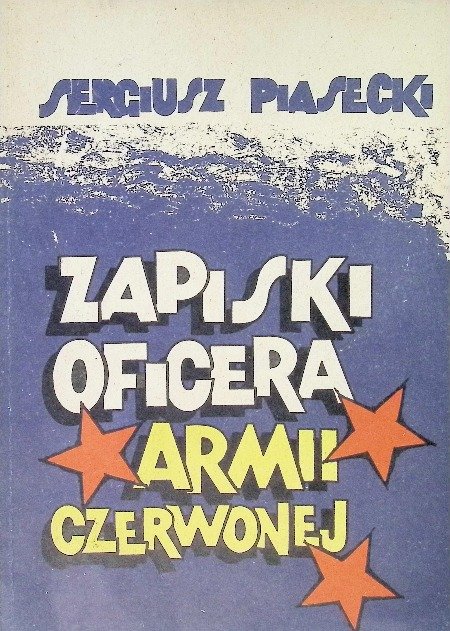
Piasecki spoke of himself: “I fought communism all my life – first with a weapon in my hand, then with a pen.” His casus at the same time confirms how the communists could remove crucial figures (such as writers) almost completely out of public consciousness. The books of this author, however, resisted the passage of time, are read well and are inactive up to date. His most celebrated fresh “Big Bear Lover” published in 1937 had 3 releases in Poland before the war. It has besides been translated into 16 languages, and the number of abroad releases is impressive. The following novels were published a year later: “The 5th Stage” and “The Gods of the Night Equal”. Piasecki wrote about what he experienced. The subject substance of these novels so concerns smuggling and spy environments. However, there is simply a lyrical atmosphere next to crime and sensational themes. After the war, on emigration, the author published further works, frequently working physically. It is worth mentioning, for example, the “robbery trilogy”: “Jabłuszko”, “I will look into the window”, “No 1 will give us salvation.” These novels have a sharp communicative and a large realism of descriptions. They cover the lives of thieves and another criminals in Vilnius and Minsk Litewski and the peculiar morality of this environment. They besides show the mechanisms they push people into conflict with the law. Piasecki besides very suggestively presented the image of “democratic Poland” after 1945. First in the grotesque “Seven pills of Lucifer”, in which he told about the career that the devil Marek was doing in communist Poland (the motive of the devil is clear in Piasecki’s work), and then in the “Registers of an officer of the Red Army” – an acute satir for communist mentality, written under the influence of meetings with russian officers, a song that frequently evokes laughter, but besides has a sad ending. In his books "The Slash of Legend", "The Man turned into a Wolf" and "For the Honor of the Organization" he preserved the business reality and activity in the AK. In 1962, the fresh “The Life of a Defused Man ” was published.it’. It concerns the destiny of soldiers demobilized after the war with Bolsheviks who faced the possible of unemployment and hunger. Therefore, to save themselves, they sometimes entered a criminal road. The first version of the song was created before the war under the influence of the writer's individual experiences. In addition to bitter realism, the song besides permeates the sympathy for unhappy people cast out by destiny into the margins of society.
Piasecki besides wrote public texts for the Polish emigration press in addition to the novel. His articles were published in the “News”, “News”, “Polish Journal” and “Polish Week” in the USA, “National” in France and “Overcurrent” in Switzerland. In his articles, he judged the communist strategy and those who supported it very harshly. In his opinion, he even marked the western states' policy towards the USSR. In the pamphlet “Former Poputczik Miłosz”, he powerfully criticized the later Nobel laureate for his serveilism towards communists, which caused a storm in the pages of the Parisian “Culture”. Piasecki had reason to retaliate for the way Miłosz treated Jadwiga.
Is Piasecki curious today?
The reading of Piasecki's aforementioned and another works is interesting due to the chronicle of faithfulness to the realities, the authenticity of heroes, the alert, sensational action and lyricism. A talented author shows the planet to himself, avoiding simplistic assessments, even for people who have entered into conflict with the law. Politics was the overriding imperative of his work. He was a patriot in matters of his homeland. Hence, even as an enemy of communism and 1 of the precursors of spreading the fact about russian reality. Anti-communism was for him a conflict against evil over civilizational and cultural principles. With large sentiment he referred to the Kresów in this peculiar borderland of the Polish-Soviet 1920s and 1930s, full of dangers, social contrasts, but besides circumstantial culture and landscape. He frequently described the Polish Vilnius, his beloved city, and the border towns (like his native Lachowice) and villages, clashing the mentality of the local population with the realities imposed by the border. He besides preserved the language of those lands in this criminal jargon. Many well-known critics in Poland and emigration wrote about Piasecki, but he did not like popularity and meetings with readers (whose he frequently was more curious in as a adventurer than a writer). The opinions of most of his contemporary writers can be closed in the conviction of an unknown author: “Piasecki is simply a large talent of self-born, solid ore, not done, but containing a immense percent of gold” (London’s “News” of 23 VIII 1959).
Prof. Ryszard Zajączkowski