The events of October 30 at the Constitutional Court sparked another installment of the dispute over the regulation of law in Poland. This time, however, the problem goes far beyond individual conflicts and political sympathy. erstwhile Prime Minister Leszek Miller warns that an effort to repair the state through actions without a clear legal basis may prove to be more dangerous than the pathologies it is expected to remove.
At the centre of the controversy was the concept of "a state of higher constitutional necessity", which was justified by the dismissal from the duties of president of the Constitutional Court Bogdan Święczkowski and his deputy Bartłomiej Sochański. In Leszek Miller's view, we are faced with a dangerous precedent in replacing existing legal standards with an arbitrary explanation of political necessity. The erstwhile Prime Minister leaves no uncertainty about the assessment of the legal structure cited: “It does not come from the Constitution, it does not come from any law, nor is it a established constitutional custom. It's a doctrinal structure that can have value at an academic seminary, but it can't be the basis for public authorities. Article 7 of the Constitution is unequivocal in this respect: public authorities operate on the basis and within the limits of the law. Not on the basis of “necessity”, even if individual considers it superior and constitutional.”
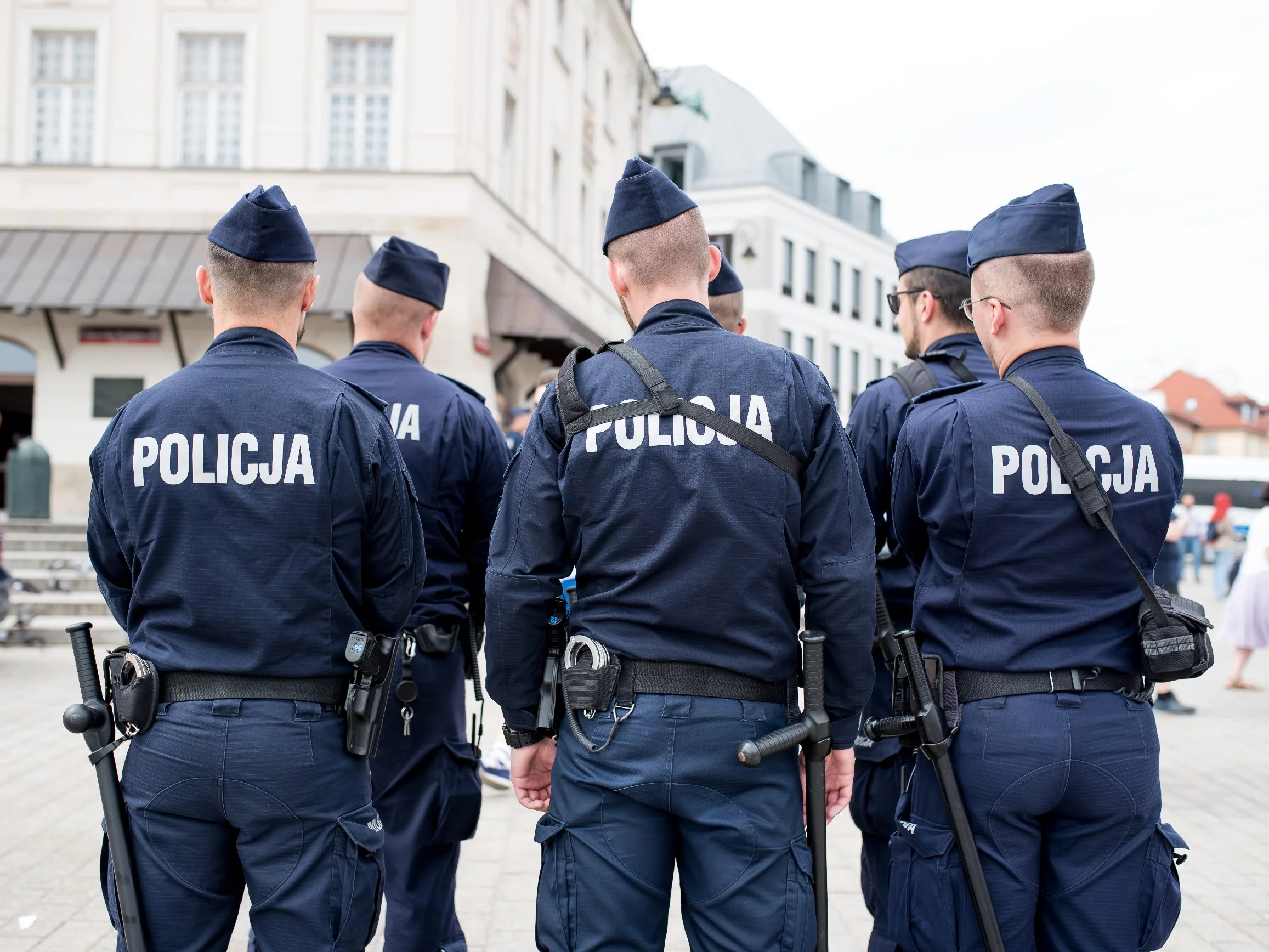
The direct origin of this message was the events of October 30, 2026. justice Anna Korwin-Piotrowska then issued orders providing for a break in the performance of his duties by the president and Vice-President of the Constitutional Tribunal. This was accompanied by the presence of the police who secured the Court building. The erstwhile management was prevented from entering the seat of the institution.
Miller points out that the rules on the functioning of the average courts which have been invoked in those decisions do not automatically confer akin powers towards the leadership of the Constitutional Court.
What is peculiarly crucial is that criticism of the actions taken is not limited to political groups opposed to the current government.
The first president of the ultimate Court Zbigniew Kapiński expressed his firm opposition to the events in the Court, indicating the danger of usurping the powers of the state authorities. The president of the ultimate Administrative Court, Jacek Chlebny, took the same critical position, stressing the request to respect the constitutional boundaries of public institutions.
The posts of the Ombudsman and the Helsinki Foundation for Human Rights besides deserve peculiar attention. The Ombudsman considered the construction of a higher constitutional necessity to be an extrajudicial view. The Helsinki Foundation, despite a critical assessment of the Court's current functioning, besides challenged the legal basis for the actions undertaken by Korwin-Piotrowska.
It is hard to find a more meaningful illustration of the paradox in which the Polish state is located. Even environments demanding profound changes in the Court see that the measures taken may violate the principles for which these changes are to be carried out.
Miller draws clear conclusions from this situation: "Since the "break-up" provision does not have an effective basis in the applicable law, it cannot consequence in a failure of function. Bogdan Święczkowski is formally inactive the president of the Constitutional Tribunal. Who presently controls the building and servers is simply a substance of fact, not of law. However, the legal state does not function on the basis of ‘who has the police, he is right’.
"History of Polish constitutional crises teaches that it is easy to cross the border, it is harder to reconstruct it. Today, “a state of higher necessity” is intended to “save the Court.” next day individual else may feel that a higher necessity requires the suspension of individual else. And a law that ceases to apply erstwhile “you gotta do something” ceases to be a law. It becomes a tool. And that is the point of the problem, regardless of which side of the barricade you stand on."
red