Unlike the balanced relation between law and policy in intra-state agreements, global relations are more frequently dominated by the regulation of law policy.
The interests of states, especially the powers, take the lead, which means circumventing the law and even its flagrant violation. The most apparent manifestation of this phenomenon is the usage of force or the threat of its use, which despite the formal prohibition in global law (Article 2.4 of the UN Charter) is constantly repeated in practice.
The specificity of global relations is that politics is not a derivative of 1 centre of power (there is no planet government), but is an accident of state policies and games of different forces. This is 1 of the reasons why political factors frequently stay in sharp contrast and even conflict with legal requirements. interior policies are aimed at organising and reconciling individual interests for the common good. In global relations, however, each state policy is aimed at satisfying peculiar interests, which is the origin of divisions and centrifugal tendencies. This is not conducive to the improvement or strengthening of global law.
Realistic Tradition
Realistic tradition is the strongest influence on knowing the relation between politics and law. It treats the law as an instrument for subjugating the weaker by the stronger. Baruch Spinoza stated this in a well-known phrase that "the first regulation of natural law is the correctness that a larger fish eats a smaller one". Supporters of the Hegel religion in the sovereignty of the state proclaimed that only force can settle disputes between states, and war sets historical vectors of advancement and improvement of civilization (Adolf Lasson, Anders Vilhelm Lundstedt, Karl Olivecrona). The deficiency of centralised sanctioning mechanisms condemned global relations to stay under force.
It is worth noting, to complement the realistic approach, that, in addition to the law of force, resulting from the hierarchy and supremacy of powers, there is besides a law of coordination based on a rationalist approach, which is simply a function of contractual (conventional) relations between states. According to liberal doctrine, law regulates cooperation, lowers transaction costs, stabilizes expectations and develops common values, especially by institutions. Finally, as the constructors point out, the law creates language, roles and categories of legitimacy. Through standards and arguments, it forms the identities and interests of participants in global relations. The combination of these approaches avoids naive idealism, as well as a reductionist view that the law is simply a facade for force. It provides the basis for a real "decision-making authority" which is in the hands of powers, groups of states and global organisations.
Relations between global law and politics are constantly changing, reinforcing or opposing each other. global law is by its nature closer to politics than any another branch of law, but constitutional law. This concerns both its subject matter, i.e. political-diplomatic relations between states and the liquidity of its sources, which are never converging in the form of a code. The polyarchical (multi-power) nature of the global strategy ensures the decentralisation and diversity of national jurisdictions. The states are jealously guarding their powers and, despite various "attacks" on their sovereignty, stand by the freedom of political action. global law is so a cover for politics, as well as a tool for legitimising decisions and actions in the global environment. His function should not be overestimated or underestimated.
Lost Imaginations
As a consequence of tragic experiences planet War I among Anglo-Saxon lawyers was born an idealistic concept of "peace by law", laying in the first universal global organization – the League of Nations – the hope that by law it would be possible to tame the aggressive urges of powers. However, it shortly turned out that relying on diplomatic assurances and promises, demands and declarations is an act of naivety. The 1930s provided many examples of breach of commitments, which the apogee became planet War II. Her experiences and cold war consequences provided a triumph of realistic doctrine. Her American prominent representatives – Hans Morgenthau and George F. Kennan, Conscious of the effects of the technological revolution in arms, however, they called for revisions of conflict-based power strategies, calling for certain forms of coexistence based on balancing forces and atomic deterrence. specified reasoning continued until the end of the “cold war.”
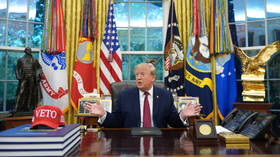
During the period of the hegemony of the American 1990s, many global regulations were eroded. global law played an crucial function in power rhetoric, but its adherence and actual effectiveness raised serious doubts. The example of the United States shows that they respect the principles of “holy” agreements and “good faith” (pacta sunt servanda and bona fides) as long as their interests dictate it. Especially during the second presidency Donald Trump global law has been instrumentalised. The integrity of the legal order is at stake and the predictability and certainty of the commitments have been reduced almost to zero.
Multilateral arrangements that constitute sources of global law have been subject to unilateral pressures and interpretations. The rule of sovereign equality of states has been limited to universal interference, inhibiting the improvement of global law. Although it has succeeded against the will of the hegemonic power to make a breakthrough in global criminal law and to establish the 1998 global Criminal Court under the Rome Statute, its functionality and effectiveness are greatly limited by the US's oppressive policy and series of sanctions.
Trump Age
The narcissistic infantilism of the Trump era replaced rational reciprocity in the legal trade between states. The United States is constantly demanding exceptional treatment for itself and its interests, granting itself peculiar rights and exceeding others. What is allowed for America (e.g. various forms of "criminal expeditions") is besides prohibited for others. global events including attacks on sovereign states (e.g. Iran) or claims to territories and resources (e.g. Greenland or Venezuela) are justified by the reasons for America's "all is allowed". Crimes against humanity are condemned or justified depending on whether they are committed by hegemon or opposers. In particular, the attitude to the “culture of extermination” in the Gaza Strip by the Israeli army shows a immense scale of hypocrisy and deception on the part of the full West. There is moral schizophrenicism, consisting of a sharp discrimination between the slogans and values preached and explicit consent and indifference.
The current situation is no exception in global relations. Geopolitical shocks have been accompanying humanity since the earliest times, only that they have never been as global as it is now. The large coalitions of states were not of a lasting nature. After gathering their strategical goals, they were usually broken up. Since the mediate Ages, there has been a confrontation between different ideologies (religions) and as part of systemic evolution, fresh states have emerged that have sought to overthrow the established order. The 20th century brought an detonation of aggressive nationalisms and decolonization, accompanied by national wars. In today's situation, there is simply a increasing economical competition and a deterioration of cultural certainty. The western political and strategical consensus is breaking down, and in the face of the increasing crack in civilization between Europe and the US, the global strategy is sinking into a multidimensional crisis.
In times of confusion, mistrust and anxiety, erstwhile the societies of many countries are subject to the psychosis of fear, it is crucial to have religion in the regulation of power. global law, which is an expression of orderable tendencies, is incapable to defend itself against revisionist tendencies and the increase of various forms of relativism. global organisations, including the UN and the OSCE, established to defend the legal order, are marginalised. Negotiating bodies on arms control and disarmament have died.
The revisionist tendencies reflect the dissatisfaction of any states with the existing rules of the game, which hinder their interests and influences. The paradox is that the US is at the forefront of revisionist states, along with its main opponents – China, Russia or Iran. The second anticipate changes in global law to limit American permissiveness, while the United States tries to manipulate standards so as to conceal this permissiveness.
Historically, the powers have always held a privileged position in the global system. In shaping the framework of global order, they sought consolidation alternatively than limiting their rights and privileges. However, today, especially on the part of the Global South, the second is expected to do so. These expectations are hard to meet. First of all, there is simply a departure from “community” and the degree of reconciliation between the interests of powers is decreasing. The precedence is to take care of peculiar interests, whether in the field of trade and customs, or in the area of arms and safeguards against the large war. In this respect, the United States, which do not quit searching for independent opportunities to guarantee control over its main rivals, is leading the way.
Politicalization of global Relations...
hinders the application of the law in an impartial and nonsubjective manner. Due to the increase in tensions and threats, all matters of national competence are politicised. all interest of the State, even if objectively secondary, is linked to its honour and prestige and thus becomes a vital interest. This makes it impossible to resolve global disputes through legal and judicial procedures. In turn, the regression in diplomatic communication prevents compromise agreements leading to consent and peace.
For these reasons, the importance of building assurance measures to improve content and strengthen global law cannot be overestimated. With a certain level of trust between countries, solutions to even hard and complex problems can be found comparatively quickly. The fresh decades have shown that states with no power position are more inclined to respect or even strengthen obligations and powers under global law. This means that the state's motivation for standards is not just about force. States besides mention the value of stability, justice or justice.
Historical experience shows that the position and designation of global law are strengthened in times of peace. For example, in the 1960 ’ s and 1970 ’ s, many agreements were made between the East and the West, and common values were sought to preserve standards and implement affirmative practices. In stormy times, erstwhile doubts, uncertainty and crises dominate, unexpected changes, acceleration and breakdown exposure the normative order to tremendous burdens. The escalation of political tension undermines collective belief in the power of global law. The effectiveness of means of peaceful settlement of global disputes is decreasing and courts and tribunals become the subject of attacks.
The war in Ukraine exposes the weakness of organization and enforcement mechanisms, strengthening the function of forces perpetuating the facts accomplished. In the view of the long-term dispute, there are many problems that are highly hard to resolve, specified as the historical rights to the Crimea and Novorosia areas occupied by Russia, the question of the stableness of the actual borders and their recognition, the real control of the occupied territory in order to exercise a peculiar jurisdiction and to grant certain rights (occupational status, guarantees of civilian rights), effective blockade of coasts and safety of shipping.
The issue is open to the admissibility of force from various sides, not only Russia, to recognise illegal conquests and territorial acquisitions. Under the UN's weakness, it is hard to foretell how effective a doctrine of failure to recognise situations arising from the unlawful usage of force or based on the violation of the right of nations to self-determination will be. For the time being, according to the NZ Charter standards, the forceful takeover of territories cannot be considered lawful, at least as long as the States active keep their opposition.
If Russia does not appear from occupied areas, the territorial situation caused by force will continue. This does not necessarily mean a complete failure of the law in the long term. Returning to the position quo ante can be the consequence of geopolitical change and change of power ratio. In the 20th century there were many solstice situations that decided to regain the erstwhile position of territories previously illegally occupied or annexed, e.g. Baltic republics. In 1940 the annexation of Lithuania, Latvia and Estonia by the USSR seemed irreversible. Gradually, there was a de facto recognition, over time transforming into designation de jure. However, the flaws of illegality and the pursuit of independency were inactive alive. In 1991, the 3 republics became independent again. The triumph of the law over force was evident.
The current global situation is not conducive to the determination of governments to defend legality and legalism. Despite the loud declarations of EU countries on solidarity with Ukraine, the reactions to the illegal state of affairs are weakened. Faced with their own economical and social problems, Western governments are beginning to thin towards Realpolitik. This means perpetuating the facts without any hope of returning to the erstwhile legal state. No 1 will now warrant that the integrity of the Ukrainian State will be saved in the foreseeable future.
There are fresh challenges to global law in the regulation of the limited usage of armed forces, which lie below the full-scale war threshold. fresh arms technologies and substitute wars make the "fair" right to usage force (ius ad vim) request urgent standardisation. States may hotel to the usage of armed forces in consequence to harm or threat, following criteria of fairness, necessity, restraint or proportionality. However, limited strength is justified only if the hazard of turning it into a war is low (Michael Walzer).
New challenges
Ius ad vim it undoubtedly reduces the threshold of legitimacy of violence. It is an ethical cover for entering “between peace and war”. Meanwhile, the ease of usage of limited force can increase the frequency of force and the hazard of escalation. Countries with limited strokes can fall into the trap of "eternal wars" and make permanent states of paralysis of law and diplomacy. The Russian-Ukrainian conflict, the war against Iran or Israel's trial with Hamas in the Gaza Strip show the negative effects of specified situations. It is worth noting that these conflicts are marked by large-scale interstate wars, but there is simply a more complex reality underneath them. Israel and the United States manage the hazard of escalation so as to convince the public of controlling and limiting the usage of force in pursuit of political objectives. akin dynamics can be observed in Russia's actions, which test the determination of Western engagement on the side of Ukraine.
At a time erstwhile countries are increasingly reaching for limited military operations alternatively than large wars, a fresh regulation seems essential and appropriate to the realities of modern armed conflicts. It is applauded mainly among Anglo-Saxon lawyers who consider that limited force can be a way of responding to aggression, terrorism or humanitarian crises, while reducing the number of victims, reducing demolition and preventing escalation. In this sense ius ad vim is presented as an effort to reduce force by providing ethical guidance on forms of force that lie between war and law enforcement.
The essence of the fresh approach to the legitimate usage of force is the belief that a crucial discrimination can be made between war and the usage of force that is not war. specified a position is indeed falsifying reality and diverges from global law, which treats both large-scale and limited usage of force as a manifestation of armed conflict. It would be good if representatives of the Polish discipline of global law besides took part in the ongoing debate.
Prof. Stanisław Bielen
Przemyśl Polska, nr 43-44 (25-31.10.2026)